Holistic Healing Blog
Support, Education, and Insights for your Healing Journey
Why Self-Awareness Isn’t Enough: The Missing Step Between Understanding Yourself and Creating Real Change
Many people who seek personal growth have incredible self-awareness.
They have reflected on their experiences. They understand where their patterns come from. They can often explain why they react the way they do.
And yet, they still find themselves repeating the same responses.
The overthinking.
The hesitation.
The self-doubt.
The moments where they disconnect from themselves, even when they know what they want.
This can feel confusing.
“If I understand myself so well, why hasn’t anything changed?”
The answer is not that you haven’t done enough work.
The missing piece is often the difference between self-awareness and embodiment.

Understanding a Pattern Is Not The Same As Changing It
Self-awareness is an incredibly important first step.
When we begin noticing our emotional patterns, we create space between ourselves and our automatic responses.
Instead of:
“I am an anxious person.”
We begin to notice:
“I am experiencing anxiety right now.”
That awareness creates choice.
But knowing why something happens does not always change what happens in the moment.
You can understand why you overthink.
You can understand why you struggle to trust yourself.
You can understand where certain beliefs began.
And still, under pressure, your old responses can appear.
Why?
Because patterns are not only thoughts.
They are also emotional responses, nervous system responses, and learned ways of protecting yourself.

Why Change Needs To Happen In Real Time
Most people try to create change after the pattern has already happened.
They reflect afterwards:
“Why did I say yes when I didn’t want to?”
“Why did I doubt myself?”
“Why did I shut down in that conversation?”
Reflection is valuable.
But deeper change happens when you begin noticing the pattern as it is happening.
That is the moment where a new response becomes possible.
The conversation.
The decision.
The pressure point.
The moment where you usually lose connection with yourself.
This is where awareness begins becoming embodied change.
The Nervous System’s Role In Lasting Change
Your nervous system is constantly responding to your environment and experiences.
When a situation feels threatening, uncertain, or emotionally charged, your body may move into familiar protective responses:
- overthinking to create certainty
- people-pleasing to maintain connection
- shutting down to avoid overwhelm
- self-doubt to prevent perceived mistakes
These responses are not failures.
They are patterns your system learned for a reason.
Creating change is not about fighting yourself or forcing yourself to behave differently.
It is about developing enough awareness and safety to respond differently when those patterns arise.
Holistic counselling can provide a supportive space to explore your emotional experiences, patterns, and responses while developing greater self-awareness and practical tools for navigating change.
Moving From Insight Into Embodied Self-Trust
Self-trust is not built by simply telling yourself:
“I need to trust myself more.”
It grows through experiences where you begin noticing:
“I can stay connected to myself here.”
“I can make this decision.”
“I can listen to what I need.”
“I can respond differently.”
This is the difference between knowing something intellectually and experiencing it internally.
Understanding why self-trust can feel difficult is an important part of creating change. You can explore more about this in my article:
Why You Don’t Trust Yourself (And How Self-Trust and the Nervous System Are Connected)

When Self-Awareness Becomes Real Change
Many people are not lacking insight.
They are lacking the bridge between:
Understanding themselves
and
living differently in the moments that matter.
That bridge is where deeper transformation happens.
Return to Self
Return to Self is an 8-week 1:1 emotional transformation program for high-functioning professional women who understand their patterns but are ready to create real-time change.
Through personalised support, nervous system education, and emotional pattern work, we explore what keeps repeating and support you to build greater self-trust, clarity, and connection with yourself.


Final thoughts
You do not need more information about yourself.
You may need support integrating what you already know into the way you live, respond, and choose.
Because awareness is the beginning.
Embodied change is where life starts to feel different.
The Link Between Trauma, Self-Doubt and Confidence (And How the Nervous System Responds)

Understanding Trauma, Self-Doubt and Confidence
Self-doubt is often described as a lack of confidence.
But trauma, self-doubt and confidence are deeply connected through the nervous system.
When it doesn’t feel safe to be seen or expressed, your system adapts.
How Trauma Impacts the Nervous System and Confidence
Trauma doesn’t have to be extreme.
It can be repeated experiences such as:
-
criticism
-
judgement
-
not being heard
-
pressure to be perfect
Over time, your nervous system learns that visibility may not be safe.
This directly impacts confidence.
Self-Doubt as a Nervous System Response
When your nervous system associates visibility with risk, it creates protection.
This may look like:
-
overthinking
-
holding back
-
avoiding opportunities
-
constantly questioning yourself
This is often misunderstood as low confidence.
But it is a protective response.
Understanding confidence and the nervous system changes how you approach this.
👉 Read more: https://intuitivelifehealings.com/confidence-and-nervous-system
Why Nervous System Regulation Is Key
You can’t think your way out of self-doubt if your nervous system still feels unsafe.
This is why nervous system regulation for confidence and anxiety is essential.
👉 Learn more: https://intuitivelifehealings.com/nervous-system-regulation-for-confidence-and-anxiety/

Rebuilding Confidence Through Safety
Healing self-doubt is not about forcing confidence.
It’s about creating safety within your nervous system.
As safety increases:
-
self-doubt softens
-
self-trust strengthens
-
confidence returns
This connects to rebuilding self-trust and the nervous system.
👉 Read more: https://intuitivelifehealings.com/self-trust-and-nervous-system/
Final Thoughts
If you struggle with self-doubt, you’re not lacking.
Your system has learned to protect you.
And with the right support, that protection can soften.
Because confidence isn’t built.
It returns when your nervous system feels safe.
How Nervous System Regulation Supports Confidence, Anxiety and Self-Trust

Why Nervous System Regulation Matters for Confidence
Confidence and the nervous system are closely linked.
If you struggle with anxiety, overthinking, or low confidence, your nervous system may not feel safe.
This is why mindset work alone often isn’t enough.
Signs of a Dysregulated Nervous System
A dysregulated nervous system can show up as:
-
constant overthinking
-
feeling overwhelmed
-
avoiding visibility
-
difficulty making decisions
These are nervous system responses, not personality flaws.

How Nervous System Regulation Improves Confidence
When your nervous system doesn’t feel safe:
-
you hesitate
-
you second guess yourself
-
you avoid being seen
This is often mistaken for a lack of confidence.
But it’s actually a safety response.
Understanding confidence and the nervous system helps shift this perspective.
👉 Read more: https://intuitivelifehealings.com/confidence-and-nervous-system/
Simple Ways to Regulate Your Nervous System
You don’t need complex tools.
Start with:
-
grounding your awareness in your body
-
slowing your breathing
-
reducing overstimulation
-
noticing tension and releasing it
For more on how trauma impacts the body, see:
👉 https://www.psychologytoday.com/au/basics/trauma

Why You Don’t Trust Yourself (And How Self-Trust and the Nervous System Are Connected)

Why You Don’t Trust Yourself
If you find yourself overthinking decisions, second guessing your choices, or constantly seeking reassurance, it can feel like you don’t trust yourself.
But self-trust and the nervous system are deeply connected.
This isn’t about being indecisive.
It’s about whether your system feels safe enough to rely on your own internal signals.
How Self-Trust and the Nervous System Become Disconnected
You weren’t born without self-trust.
It becomes disrupted over time through experiences where:
-
your voice wasn’t heard
-
your decisions were questioned
-
it didn’t feel safe to get things wrong
Over time, your nervous system adapts.
You begin to look outside yourself for answers because internally things no longer feel stable.
This is also why many people struggle with confidence and the nervous system, not just mindset.
👉 Read more here: confidence and the nervous system → https://intuitivelifehealings.com/confidence-and-nervous-system/

Why You Override Your Intuition
You may know what feels right, but still hesitate.
You delay decisions.
You seek reassurance.
You question yourself.
This happens when your intuition and your nervous system are not aligned.
Your intuition is clear.
But your system is prioritising safety.
How to Rebuild Self-Trust Through Nervous System Safety
Rebuilding self-trust doesn’t come from forcing confidence.
It comes from creating safety within your nervous system.
You can begin by:
-
noticing where you override yourself
-
slowing down decisions
-
grounding your body
-
allowing space before reacting
This is where nervous system regulation for confidence and anxiety becomes important.
👉 Learn more: https://intuitivelifehealings.com/nervous-system-regulation-for-confidence-and-anxiety
For a deeper understanding of how the nervous system responds to stress, see:
👉 https://www.health.harvard.edu/mind-and-mood/relaxation-techniques-breath-control-helps-quell-errant-stress-response
Coming Home to Yourself
When your nervous system begins to feel safe, self-trust starts to return.
You stop searching outside yourself.
Your decisions feel clearer.
You begin to trust your internal signals again.
🌿 Why Confidence Isn’t Something You Build — It’s Something You Uncover

Why Confidence Feels So Hard to Build
There is a common belief that confidence is something you need to build.
Something you work on.
Strengthen.
Practice until you finally “become” confident.
But confidence and the nervous system are more connected than most people realise.
Because you can do all the mindset work in the world… and still feel inconsistent.
Confident one day.
Full of self-doubt the next.
This isn’t because you’re doing something wrong.
It’s because confidence isn’t just mental.
Confidence and the Nervous System
Confidence and the nervous system work together.
Your nervous system is constantly scanning for safety.
And if at any point being seen, speaking up, or expressing yourself felt unsafe, your system remembers.
So even when your mind says, “I’m ready,” your body may respond with hesitation.
You might overthink.
Second guess yourself.
Hold back.
Not because you lack confidence.
But because your nervous system is trying to protect you.

The Link Between Self-Doubt and Safety
Self-doubt is often treated as a confidence issue.
But more often, it’s a safety issue.
If your system has learned that visibility leads to judgement, rejection, or pressure, it will try to keep you safe.
So you hesitate.
Not because you’re incapable.
But because your body is responding to what it believes is risk.
This is where confidence and the nervous system become important to understand.
Why You Override Your Intuition
One of the most frustrating experiences is knowing what you want to do… and not doing it.
You override yourself.
You look for reassurance.
You delay decisions.
You question your instincts.
This happens when your intuition and your nervous system are not aligned.
Your intuition may be clear.
But if your nervous system doesn’t feel safe, your protective patterns take over.
Confidence as a Byproduct of Safety
Here’s the shift most people don’t expect:
Confidence is not something you force.
It’s something that emerges when your nervous system feels safe.
When your system is regulated:
-
your thinking becomes clearer
-
your decisions feel more grounded
-
your voice becomes easier to access
Confidence becomes steady.
Not something you perform.
Something that naturally exists when your body feels safe.
Coming Home to Yourself
This is the deeper work.
Not trying to fix yourself.
Not trying to become someone else.
But learning to feel safe in who you already are.
To reconnect with your body.
To regulate your nervous system.
To trust your internal signals again.
This is what I call coming home to yourself.
Final Thoughts
If you’ve been trying to build confidence and feeling stuck, you’re not lacking.
Confidence and the nervous system are connected.
And when your system begins to feel safe…
Confidence doesn’t need to be built.
It returns.
What Happens in an Energy Healing Session?
Interested in what happens in an Energy Healing Session?
If you’ve ever been curious about energy healing but felt unsure what actually happens in a session, you’re not alone. Many women feel drawn to this work yet hesitate because it feels unfamiliar.
Energy healing is a gentle, supportive experience designed to help your body and nervous system return to balance. There’s nothing you need to “do right” — your role is simply to relax and receive.
Here’s what you can expect.
🌿 A Safe, Calm Space
Every session begins by creating a space where you feel safe, supported, and at ease. Whether you’re attending in person or online, the environment is calm and grounding.
We start with a brief conversation about how you’ve been feeling emotionally, mentally, and physically. You’re welcome to share as much or as little as you like. This helps guide the focus of the session. We discuss what you can expect from me during the session.
There is no pressure to relive difficult experiences. Energy healing works gently, meeting your system exactly where it is.
✨ You Lie Down and Relax
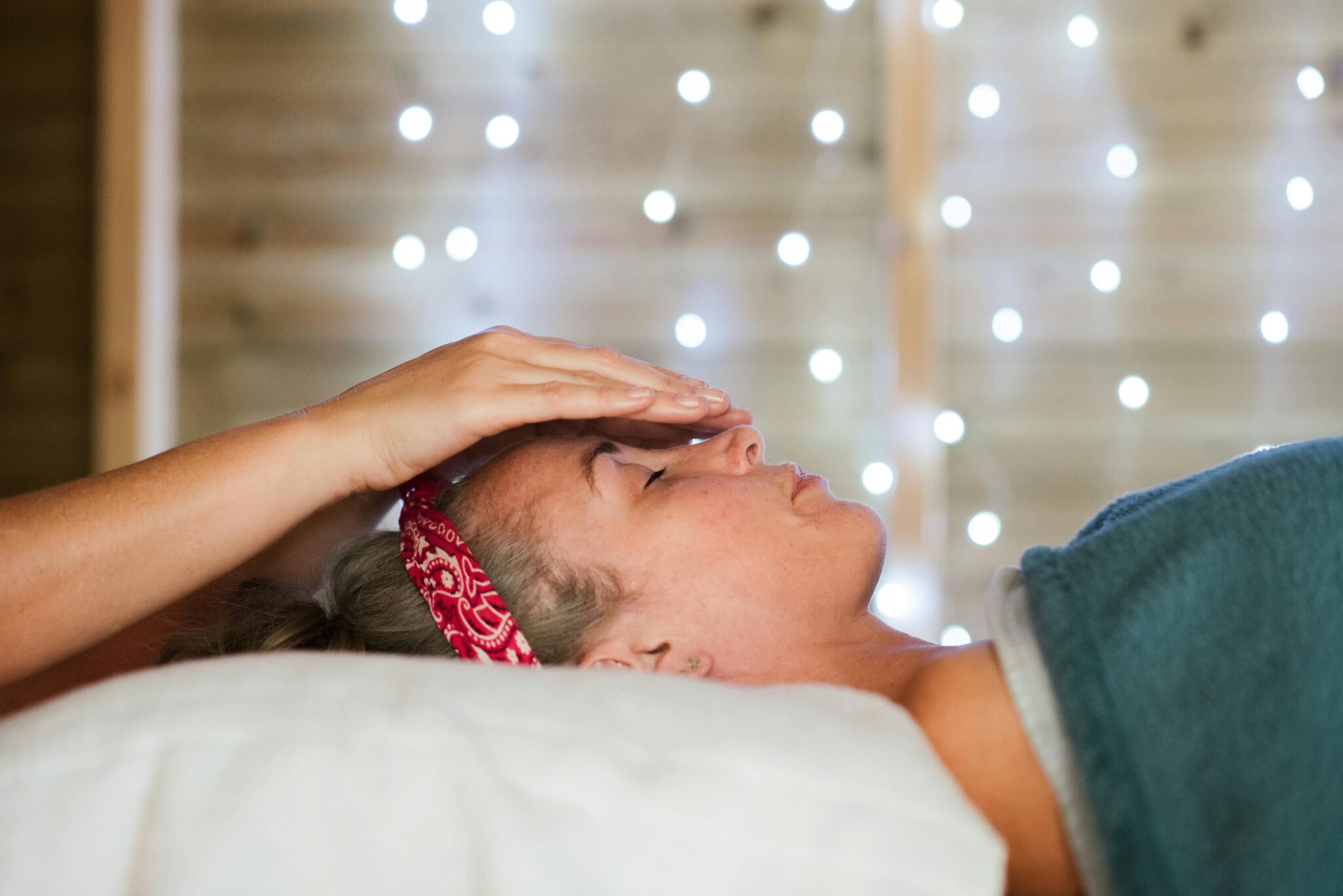
During the healing portion, you’ll lie comfortably on a treatment table (or relax at home for distance sessions). You remain fully clothed, and there is no physical manipulation like in massage.
Your only job is to rest and breathe.
Some people like to close their eyes, others drift into a meditative state, and some even fall asleep. All responses are completely normal.

🙌 Gentle Energy Work Begins
I begin channelling healing energy to support your body’s natural ability to restore balance. This may involve:
-
Light hands-on or hands-above-body energy work
-
Focusing on specific energy centres (chakras)
-
Intuitive guidance based on what your system needs
- The use of a pendulum, crystals or singing bowl to help balance your chakras and energy system.
You don’t have to understand energy for it to work. Your body already knows how to receive what it needs.

🌸 What You Might Feel
Every person experiences energy healing differently. Some common sensations include:
-
Warmth or coolness
-
Tingling or gentle waves of energy
-
A floating or heavy feeling
-
Emotional release
-
Deep calm or sleepiness
You might also simply feel peaceful — and that is just as powerful. Healing doesn’t need to be dramatic to be effective.
Whatever you experience, is exactly what it should be.
Sometimes insights, memories, or clarity arise. Other times, the shifts happen quietly and unfold in the days after your session.

💫 Emotional & Energetic Release
Energy healing helps release stored stress, emotional tension, and energetic blockages that may be contributing to feelings of overwhelm, anxiety, fatigue, or disconnection.
Because this work is trauma-aware and gentle, it supports your nervous system rather than overwhelming it. You remain in control the entire time.
If you need to stop for any reason…we stop and you are supported.
Many women describe feeling lighter, clearer, or more like themselves afterward.
🌙 After the Session
At the end, we take a few moments to talk about what came up for you and any guidance that may support your integration.
You may feel:
-
Deeply relaxed
-
Emotional but lighter
-
Tired and ready for rest
-
Clear and grounded
Drinking water, resting, and being gentle with yourself afterwards helps your body integrate the healing.
Grounding is important after a session also. Bare feet on grass, walking on sand or sitting at the base of a tree….all help to reconnect you with the earth’s energy.
Shifts can continue for several days as your system recalibrates.

🌷 Is Energy Healing Right for You?
Energy healing can support you if you’re experiencing:
-
Stress or emotional overwhelm
-
Anxiety or burnout
-
Feeling disconnected from yourself
-
Life transitions or grief
-
A desire for deeper self-connection and clarity
You don’t need to be “spiritual” or have prior experience. Just a willingness to rest , be open and receive.
💛 Ready to Experience Energy Healing?
If you’re feeling called to reconnect with calm, clarity, and balance, energy healing offers a gentle and supportive path back to yourself.
You can book a session or reach out if you’d like guidance on whether this is the right next step for you.
This content is educational in nature and not a substitute for professional medical or psychological advice.
Kate Duck is a trauma-informed holistic healer and intuitive life coach based on the Central Coast, NSW. She supports women through EFT, Reiki, counselling, and intuitive guidance, offering sessions locally and online.

What Is EFT Tapping and How Does It Help Anxiety?
What is EFT Tapping and How Does it Help Anxiety?
Anxiety can feel overwhelming, confusing, and exhausting — especially when you’ve tried to “think your way out of it” but your body still feels on edge.
EFT Tapping (Emotional Freedom Techniques) is a gentle, body-based approach that helps calm the nervous system while releasing emotional stress held beneath the surface.
It’s simple, effective, and increasingly recognised as a powerful support tool for anxiety.

Why Anxiety Isn’t “Just in Your Head”
Anxiety isn’t only a mental pattern — it’s a nervous system response.
When your system has experienced stress, overwhelm, or unresolved emotional events, it can get stuck in protection mode. That’s when you might notice:
- Racing thoughts
- Tight chest or shallow breathing
- Overthinking and worst-case scenarios
- Trouble relaxing, even when things are “fine”
- Feeling constantly on edge
Talking can help — but if the body still feels unsafe, anxiety often lingers.
EFT works directly with the body’s stress response.
How EFT Tapping Helps Calm Anxiety
Research and clinical use show EFT can help reduce cortisol (the stress hormone) and calm the amygdala — the part of the brain that signals danger.
Clients often report:
✔ Feeling calmer during and after tapping
✔ Less emotional intensity around triggering thoughts
✔ Improved sleep
✔ More emotional resilience
✔ A greater sense of internal safety
It doesn’t force positivity or bypass emotions.
It helps your system feel safe enough to let go.

What an EFT Session Looks Like
In a session, we gently explore what feels present for you — a feeling, memory, fear, or stress pattern.
You are always in control.
We tap together on specific points while using simple phrases that acknowledge what you’re experiencing. As the nervous system settles, the emotional charge often begins to soften.
Many people describe it as:
“Like my body finally exhaled.”
EFT for Women Experiencing Anxiety
Many women live with hidden, high-functioning anxiety — appearing capable on the outside while feeling overwhelmed inside.
EFT can support:
- Emotional overload
- People-pleasing patterns
- Fear of failure or not being enough
- Old emotional wounds still affecting the present
- Stress stored from long periods of “holding it together”
Because EFT is gentle and non-invasive, it’s especially supportive for women who feel emotionally exhausted or sensitive.

You Don’t Have to Stay in Survival Mode
Anxiety is not a personal failure.
It’s your nervous system trying to protect you.
With the right support, your system can learn that it’s safe to soften.
EFT Tapping is one of the ways we help the body move from survival… back into safety.
If you’re experiencing anxiety and feel drawn to a gentle, holistic approach, EFT may be a supportive place to start.
I offer trauma-informed EFT sessions for women on the Central Coast, NSW and online worldwide.
You can learn more or book a session by clicking the button below –
This content is educational in nature and not a substitute for professional medical or psychological advice.
Kate Duck is a trauma-informed holistic healer and intuitive life coach based on the Central Coast, NSW. She supports women through EFT, Reiki, counselling, and intuitive guidance, offering sessions locally and online.